Silhouet
Make building product as simple as selling it.
You sketch it. Silhouet drafts the spec, the measurements and the materials in minutes, and your factory works from one live link. A style is a record, not a folder. Your catalog and your sales sit next to everything you have already produced. Shopify gives brands the sell side. Silhouet gives brands the make side.
Nothing remembers this but you
By your third season you have made a few hundred decisions about how your brand builds. The fabric weight that held its shape. The collar you redrew twice. The answer to the question your factory asks every time. Almost none of it is anywhere you can use again.
In your head: the things you would never write down, because obviously you will remember them. You do, for about a season.
In the factory thread: two months of messages, one buried line where you agreed to the change, and no way to find it when you reorder.
In a folder of dead files: last season tech pack, flattened into a PDF, uneditable, and already wrong.
So the second time you make something, you pay for it like it is the first time.
From brand founders in beta conversations: "I spent 4 hours making a tech pack in Excel and the factory still asked 15 questions." "Every season I rebuild everything from scratch. Same hoodie, same factory, starting over like it is my first collection." "I sent 47 emails back and forth with my manufacturer on one style."
Six people do this job. You are all six.
A major label makes clothes the same way you do. Sketch, spec, sample, correct, produce, reorder. The difference is not talent and it is not taste. It is that six different people are paid to remember.
Turning a drawing into a spec: at a major label a technical design team does it. At your brand, you do it, at night, after the other nine jobs.
Keeping every style moving: at a major label a production manager owns the factory relationship and every open question. At your brand, that is you, and a thread with fifteen unanswered lines.
Holding every approved spec: at a major label, one system every function works from. At your brand, a folder of spreadsheets and PDFs.
Getting the fit right: at a major label a fit team runs the sample rounds and writes down every correction. At your brand, you measure the sample on your kitchen table.
Deciding how much to make: at a major label a planning team decides from history. At your brand, you decide from a feeling, and last season sell-through if you can still find it.
Finding who can build it: at a major label, a factory network built over decades. At your brand, referrals and cold emails. Silhouet works with two full-package manufacturing partners who handle sourcing in-house, and the introduction, quotes, sampling and production all run in Silhouet.
The work is identical. The team and the systems are what is missing.
AI that works before the money moves
Most fashion AI makes more of something. More images, more copy, more options. Silhouet works at the point of commitment, when you are about to spend on fabric, on sampling, on a production run, and a wrong call costs you a season.
The questions it answers: what should we make, how should it be made, is it factory-ready, who should make it, how much should we make, and when should we reorder.
Fab is the assistant that answers them. It reads what your brand has already made, what your factories have already asked, and what your catalog is already selling, and it answers in your brand terms rather than in general ones. The first draft of a tech pack takes minutes, not hours.
You approve every line. Nothing is saved without your confirmation, and nothing goes to a factory that you have not read. Every order it works on teaches it more about how your brand builds, so the next one starts closer to done.
Now it has somewhere to live
A style is a record, not a folder. You open it, you change it, and it stays changed. The spec, the materials, the measurements, the colorways and the sizing sit on the style itself.
The spec. Today you write it at night, in Excel, and the factory still comes back with fifteen questions. In Silhouet you sketch, and Silhouet drafts the spec, the materials and the measurements as a first draft rather than a blank template. You review and approve every line, and it goes out as one complete document.
The factory. Today it is two months of messages and one buried line where you agreed to the change. In Silhouet your factory works from one living link, questions land on the line they are about, and revisions and approvals stay with the style.
The decision. Today you decide how much to make from a feeling. In Silhouet your catalog and your sales sit next to everything you have already produced, so quantities and reorders start from your own history.
From a drawing to a document a factory can build from. Product record SLH-0042: SS26 Oversized Hoodie, BOM with 12 components linked, 8 points of measure graded, 3 colorways synced to Shopify.
This is live in beta. One brand runs its full production operation on Silhouet, on real product, inventory and production data, with no production hires. If you need a factory, we place you with one of two full-package partners who handle sourcing in-house, and the quotes, the sampling rounds and the production run all happen in Silhouet. One fulfillment agreement is signed. Beta orders are deliberately narrow, because the first ones have to be right.
The full capability list, kept current, is on the product page.
Every order makes the next one easier
This is the whole idea. Not that the first product is faster, though it is. That the tenth is nothing like the first.
Your first style: you are not starting from a blank page. Start a tech pack and industry-standard specs are already filled in for the kind of thing you are making. Your Shopify catalog comes in as it already is.
Your next collection: you change what actually changed. Same fabric, same factory, a different silhouette, and last season spec, sizing and corrections are already sitting there.
Where this goes: your way of building, written down. How your hoodies are graded, which corrections you made twice, what your factory always asks. If you hire, they can pick it up. If you change factories, the new one starts from a record instead of your explanation.
None of it is a setting you switch on. It is what happens when the work you already do stops getting thrown away at the end of a season. We are in beta, so nobody has a third year on Silhouet yet. That is the argument for starting early, not a result we can show you.
Supported by
Silhouet is a 2026 eBay Circular Fashion Fund finalist, one of eight brands selected globally, with a $50K grant and coverage in Vogue Business.
Supported by NVIDIA Inception, Google for Startups Cloud, and Columbia. Incubated and built at Columbia University, across Columbia Startup Lab, Columbia Build Lab, Columbia Business School, and Columbia Computer Science.
Who is building this
Founded by Brandon Steidley: a Penn State supply chain background into consulting for Nike and New Balance at Deloitte, then emerging brands, then AI workflow products at Amazon, and a Columbia MBA where he was president of the university flagship startup and venture capital conference.
Team: Brandon Steidley (Founder and CEO). Brad Osgood (CTO), founder of the engineering studio Emergent8, previously Squarespace and HubSpot. Chris Lee (AI/ML Lead), Columbia CS, who first-authored a study of how people work with what AI generates, presented at the ICML 2026 Human-AI Co-Creativity workshop and accepted to VL/HCC 2026 with Barnard Programming Languages Lab, and builds Silhouet AI. Mark Hrytchak (Software Engineer), Columbia CS, who won a DevPost hackathon for SkyHigh, an AI rescue robot built on a multi-agent pipeline.
Advisors: Karla Martin (Retail Tech and Growth Strategy), Kevin Mahoney (Retail Supply Chain and AI Strategy), Amelia Granata (Product and Design Strategy).
Come build one style with us
Shopify gave every brand the sell side in an afternoon. The make side never got that. It is open now to a small number of brands.
Free during beta, the full platform, no feature tiers. We onboard in small cohorts and the founding team does it personally. That is the constraint, and it is why access is limited rather than instant.
What brands come to Silhouet for
Silhouet does all three. Nobody starts with all three.
Knowing what to reorder. That call usually comes down to a spreadsheet, a gut read on last season, and whatever is loudest in the DMs. What each style cost and what it actually sold sit on the style itself, so the next order is a read instead of a guess.
Handing off a style and being done. The four hours in Excel hurt less than the fifteen questions that come back anyway. Silhouet builds the pack from your sketches, measurements, and notes, then flags the gaps a factory would ask about before you send it.
Not chasing factories. Finding a good one takes months of introductions, and keeping one means living in a thread nobody can search. One link your factory works from, so every question and revision lands on the style it is about instead of in an inbox.
Request Beta Access
Silhouet is accepting a limited number of emerging fashion brands for beta access. Beta access is free during the beta period.
Recognition
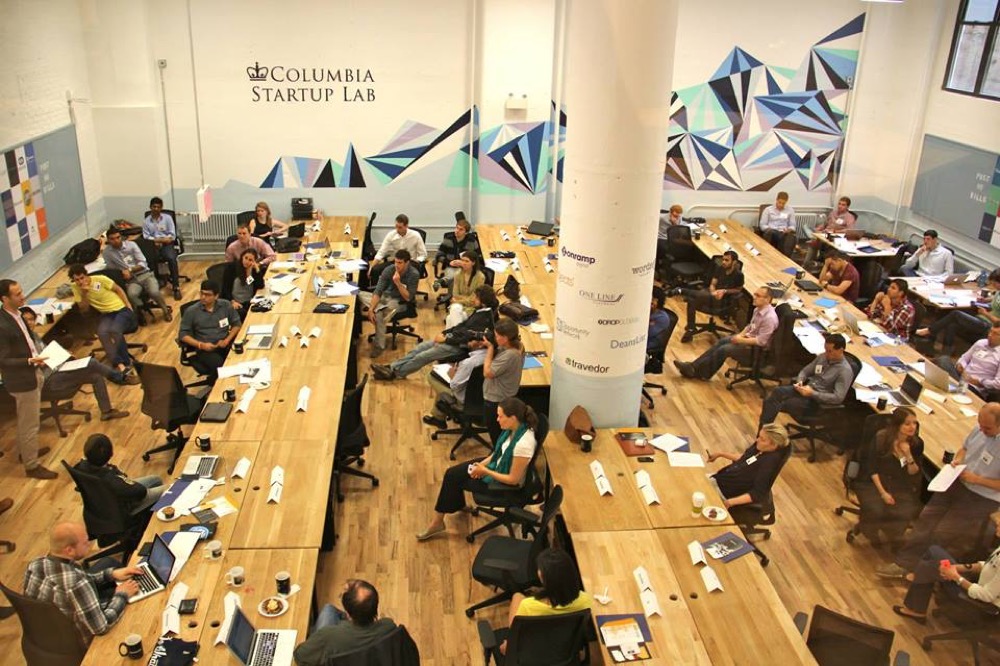 Welcome to the 2026-2027 Cohort of the Columbia Startup Lab (Columbia Startup Lab): Columbia University's startup incubator; Silhouet is in the 2026-2027 cohort
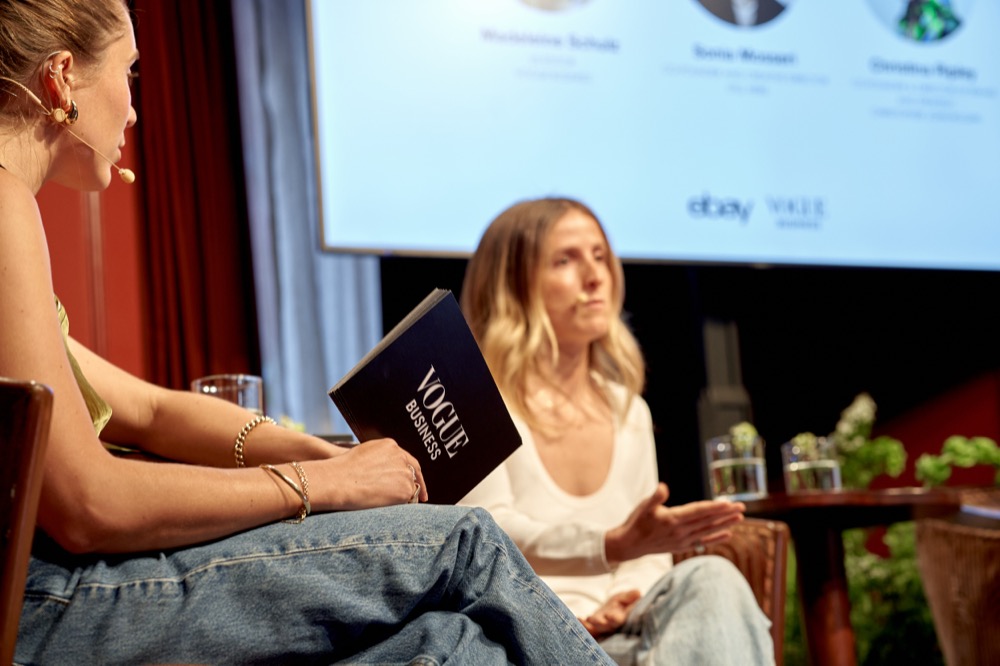 Silhouet is a global finalist in the eBay Circular Fashion Fund (Vogue Business): Reported at the eBay Fashion Forum in New York, May 2026
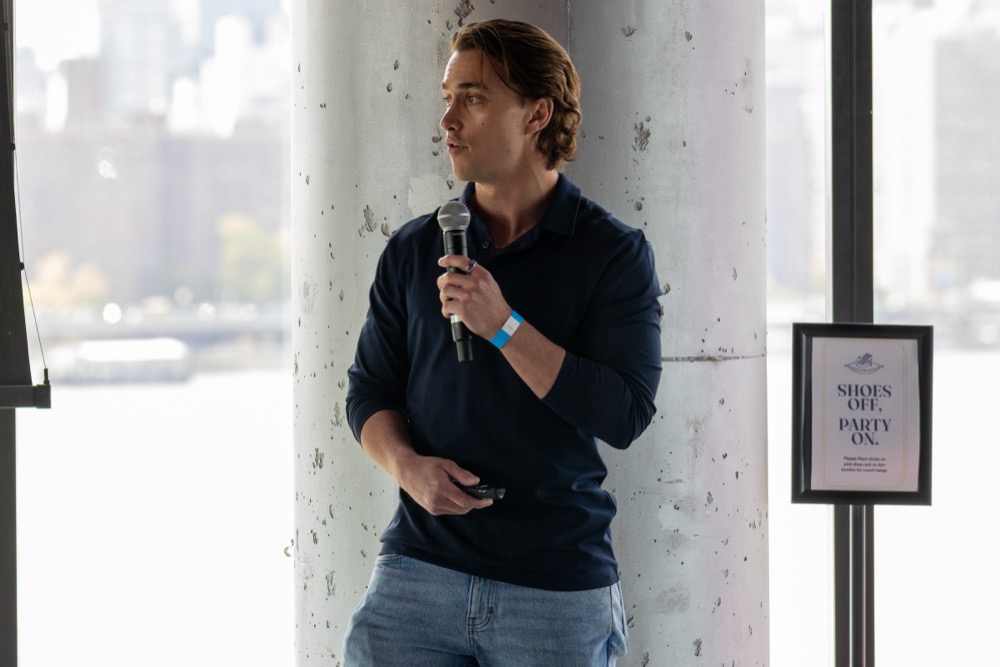 AI Start-up Challenge: Final Competition (Columbia Business School): Silhouet is named among the finalists
- Our write-up of the 2026 cohort and all eight finalists